
 Save
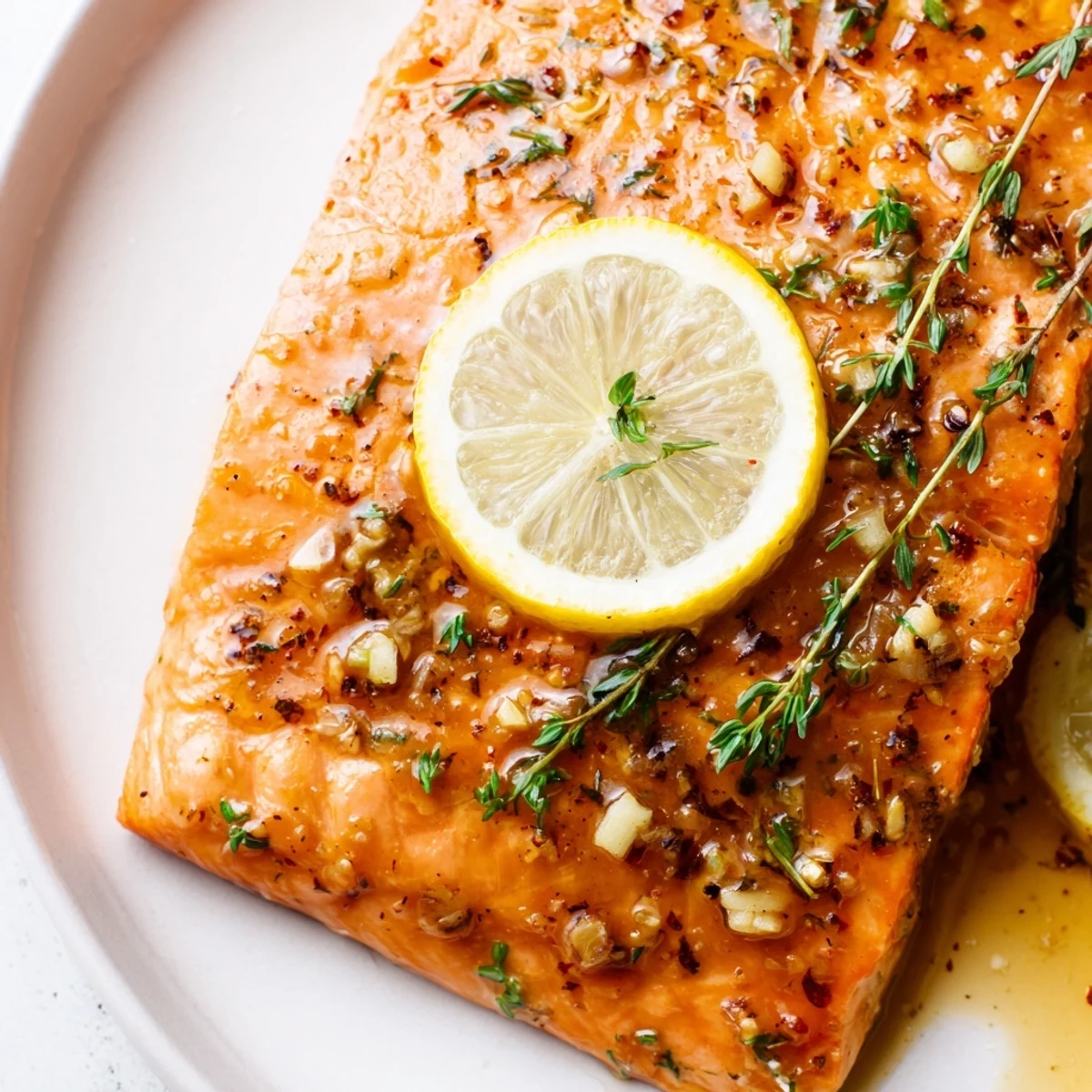
Save This dish features salmon fillets baked to tender perfection, infused with a zesty lemon marinade, garlic, and fresh herbs like thyme and dill. The marinade enhances the natural flavors of the fish while maintaining its moist, flaky texture. Ready in under 30 minutes, this meal is both simple and nutritious. Garnish with fresh dill or parsley and lemon slices for added brightness. Ideal for a gluten-free, pescatarian main course that pairs well with roasted vegetables or steamed rice.
There's a Tuesday evening I keep coming back to, when my sister called asking what I was making for dinner and I realized I had salmon thawing but zero inspiration. I opened the fridge, found a lemon, some herbs, and decided to stop overthinking it. Twenty-eight minutes later, we were eating something so bright and effortless that it became the recipe I make whenever I need to feel like I have my life together. That's what this baked salmon is—proof that the simplest meals often taste the best.
I made this for my parents once, and my dad—who usually picks at fish—asked for seconds. My mom mentioned the color, how the salmon stayed moist, how the herbs actually tasted fresh. That's when I understood that good cooking isn't about complexity; it's about choosing good ingredients and not getting in their way. The salmon skin crisped just enough, the lemon melted into the fish, and suddenly everyone was happy. That meal turned into a staple in their kitchen too.
Ingredients
- Salmon fillets (4, about 170g each): Whether you keep the skin on or remove it comes down to preference—skin on crisps nicely and keeps the fish moist, but skinless cooks a touch faster if you're in a rush.
- Olive oil (2 tablespoons): Use something good enough that you'd drizzle it on bread; it's one of only a handful of ingredients here, so it matters.
- Lemon juice (1 tablespoon): Freshly squeezed makes a difference—bottled tastes flat by comparison, and acidity is what wakes up the whole dish.
- Dijon mustard (2 teaspoons): This isn't about mustard flavor; it's an emulsifier and flavor bridge that makes everything taste more intentional.
- Garlic cloves (2, minced): Mince them small so they distribute into the marinade rather than sitting as little chunks.
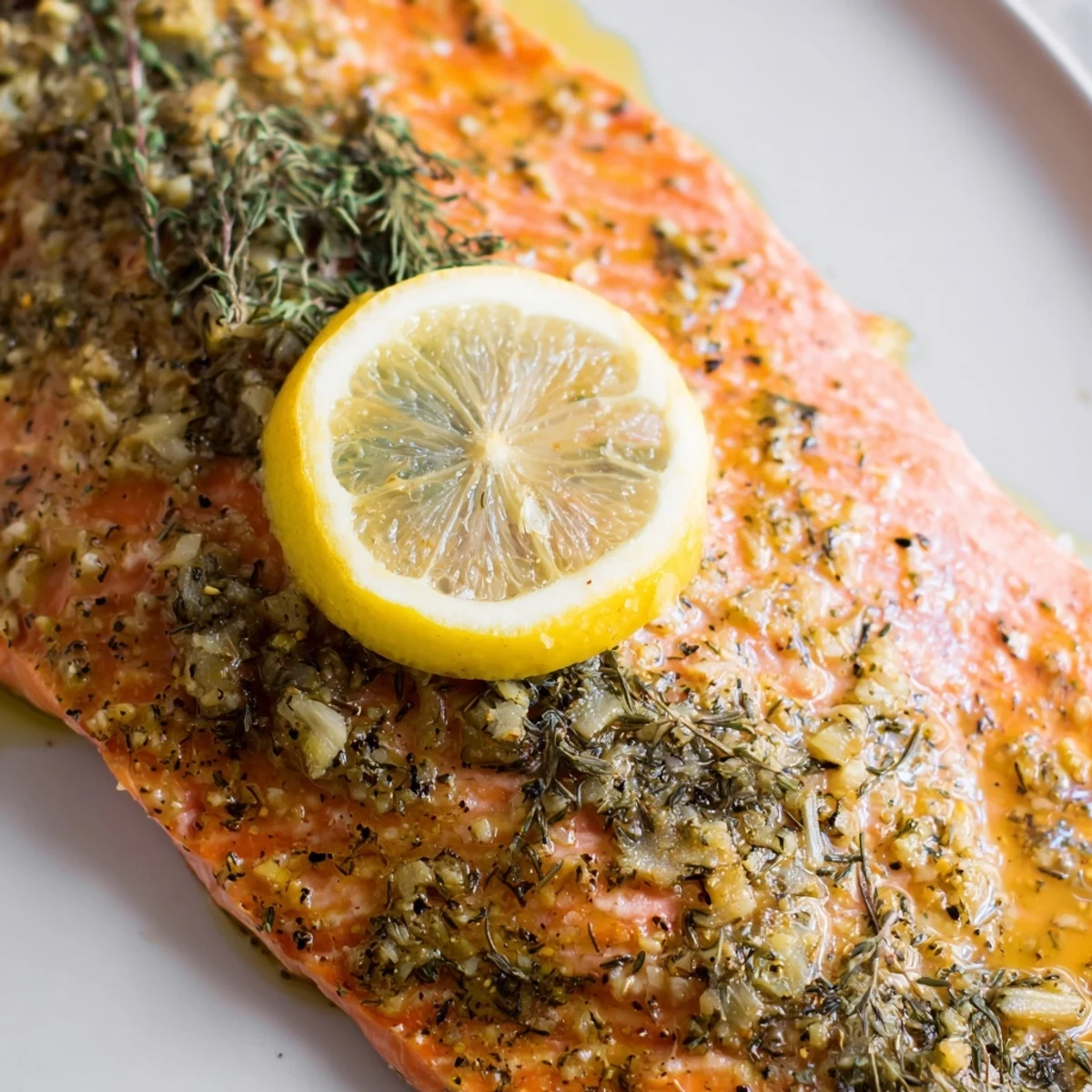
- Fresh thyme and dill (1 teaspoon each, or ½ teaspoon dried): Fresh herbs are worth the effort here—they stay bright and don't turn dusty the way dried versions can.
- Salt and black pepper (½ teaspoon and ¼ teaspoon): Season generously; fish needs salt to taste like itself.
- Lemon slices and fresh garnish (optional): A slice on top bakes down into the fillet and adds both flavor and visual proof that you tried.
Instructions
- Heat your oven:
- Set it to 200°C (400°F) and line your baking tray with parchment paper—this step saves cleanup and keeps the salmon from sticking. If you don't have parchment, a light grease with oil works just fine.
- Make your marinade:
- Whisk together the olive oil, lemon juice, mustard, minced garlic, thyme, dill, salt, and pepper in a small bowl until it looks like a loose paste. Taste it quickly on your finger—it should make you smile, not pucker.
- Prepare the salmon:
- Place your fillets on the tray skin-side down if they have skin, or just flat if they don't. The skin protects the delicate flesh underneath, so if you've got it, keep it.
- Brush with marinade:
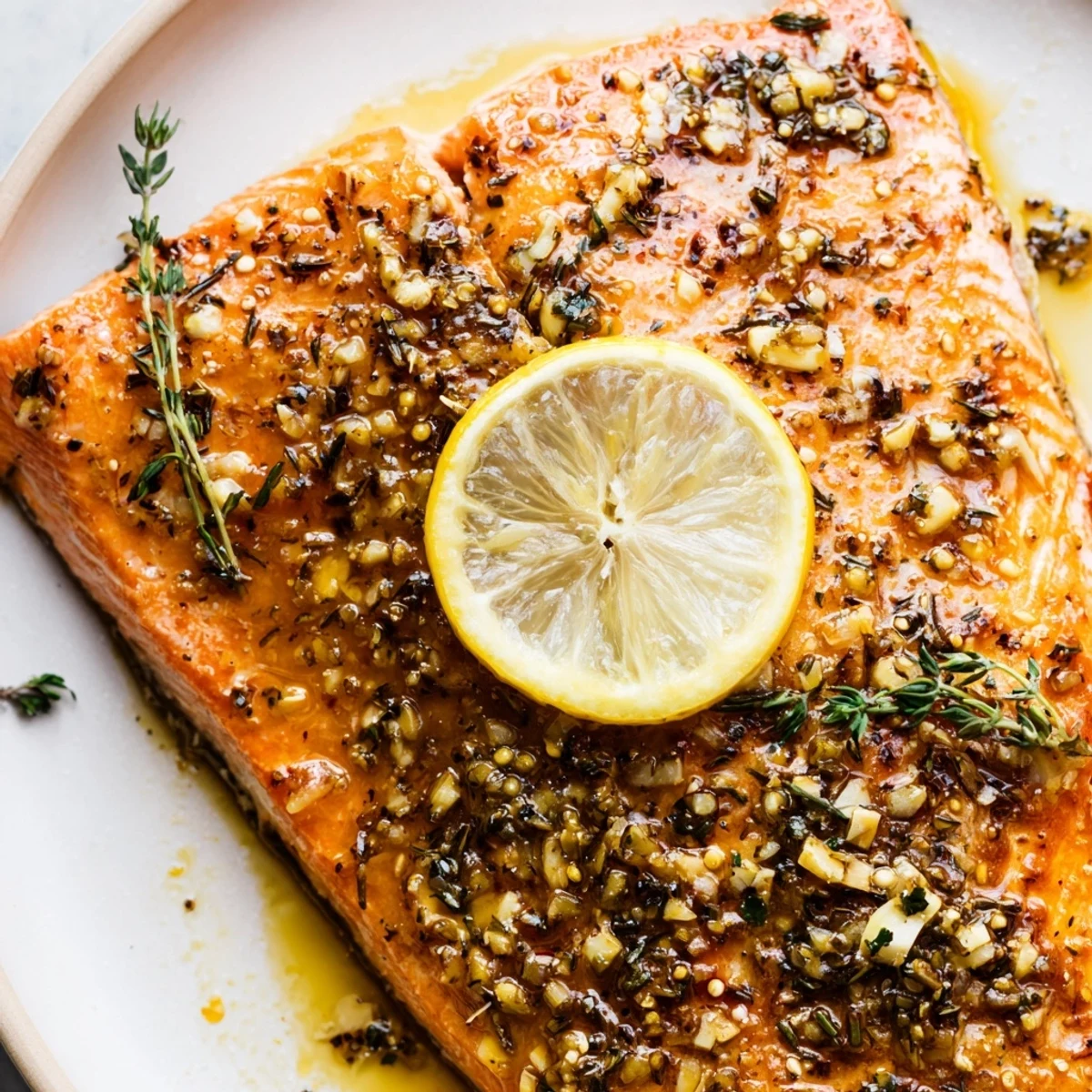
- Coat each fillet generously with your herb mixture, using all of it. The mustard will help it stick, and the herbs will create little flavorful pockets as they bake.
- Add lemon:
- Lay a lemon slice on top of each fillet. It looks pretty, adds moisture, and slowly infuses the fish as it cooks.
- Bake until just done:
- Slide the tray into your oven for 15 to 18 minutes—salmon at this thickness cooks fast. You'll know it's ready when the flesh flakes easily with a fork and the very center is just barely opaque, still glistening.
- Finish and serve:
- Pull it out, sprinkle with fresh dill or parsley if you have it, and eat it while it's warm. The heat lets the flavors sing.
 Save
Save I remember the first time I understood that salmon could be tender, not tough—that happened because I stopped cooking it all the way through and started pulling it out with just a tiny bit of translucency left. Now when I make this, I always think about that small shift, about how being brave enough to stop early is sometimes exactly what makes something perfect.
Why Simple Ingredients Win Here
The genius of this recipe is that there's nowhere to hide—every element shows up on the plate. You can't bury bad lemon juice behind a complicated sauce, and you can't trick anyone with stale herbs. This forces you to reach for the best version of each ingredient you can find, which makes the whole thing taste alive. When you do, people always ask for the recipe, and you get to tell them it took you 28 minutes.
Serving Ideas That Actually Work
I've served this with roasted vegetables (toss them with oil and salt, throw them in the oven alongside the salmon), with rice, with salad, and once even with crusty bread for soaking up the pan juices. Every version has worked because the salmon is confident enough to stand on its own but friendly enough to play well with others. The point is not to stress—whatever you have on hand will probably be better than whatever you feel like you should be making.
Small Moments That Make the Difference
One afternoon I realized I'd been using old dill from the back of my fridge, and the whole dish tasted flat until I switched to fresh. Another time, I accidentally marinated a fillet for two hours instead of diving straight into the oven, and the flavors melded in a way that felt intentional. These aren't rules—they're just small observations that stick with you once you've lived through them. Every time you make this, you're building your own collection of moments.
- If you're marinating ahead, keep it to 30 minutes maximum so the acid doesn't start breaking down the delicate flesh.
- Room-temperature salmon cooks more evenly than cold-from-the-fridge fish, so pull yours out a few minutes early.
- Lemon slices brown a bit at the edges in the oven—that's the good part, so don't peel them off.
 Save
Save This recipe lives in my kitchen because it reminds me that feeding people doesn't have to be complicated to be meaningful. Some of the best meals I've shared started with a thawing fillet and a half-empty herb jar.
Recipe FAQs
- → What is the best way to marinate the salmon fillet?
-
Whisk olive oil, lemon juice, Dijon mustard, garlic, thyme, dill, salt, and pepper together. Brush evenly over the salmon and allow it to marinate up to 30 minutes before baking to deepen flavor.
- → How can I tell when the salmon is cooked?
-
Salmon is done when it flakes easily with a fork and the center is opaque rather than translucent. Baking usually takes 15-18 minutes at 200°C (400°F).
- → Can I bake salmon fillets with skin on or off?
-
Yes, fillets can be baked skin-on or skinless. Skin helps keep the fish moist and can be easily removed after cooking if preferred.
- → What sides complement baked salmon fillets well?
-
Roasted vegetables, steamed rice, or fresh salads pair wonderfully with the bright herbal flavors of the salmon.
- → Is this dish suitable for gluten-free diets?
-
Yes, all ingredients used are gluten-free, making it suitable for those with gluten sensitivities.
- → Can I prepare this dish dairy-free?
-
Absolutely. Ensure that the Dijon mustard used is dairy-free to maintain the dish's dairy-free status.