
 Save
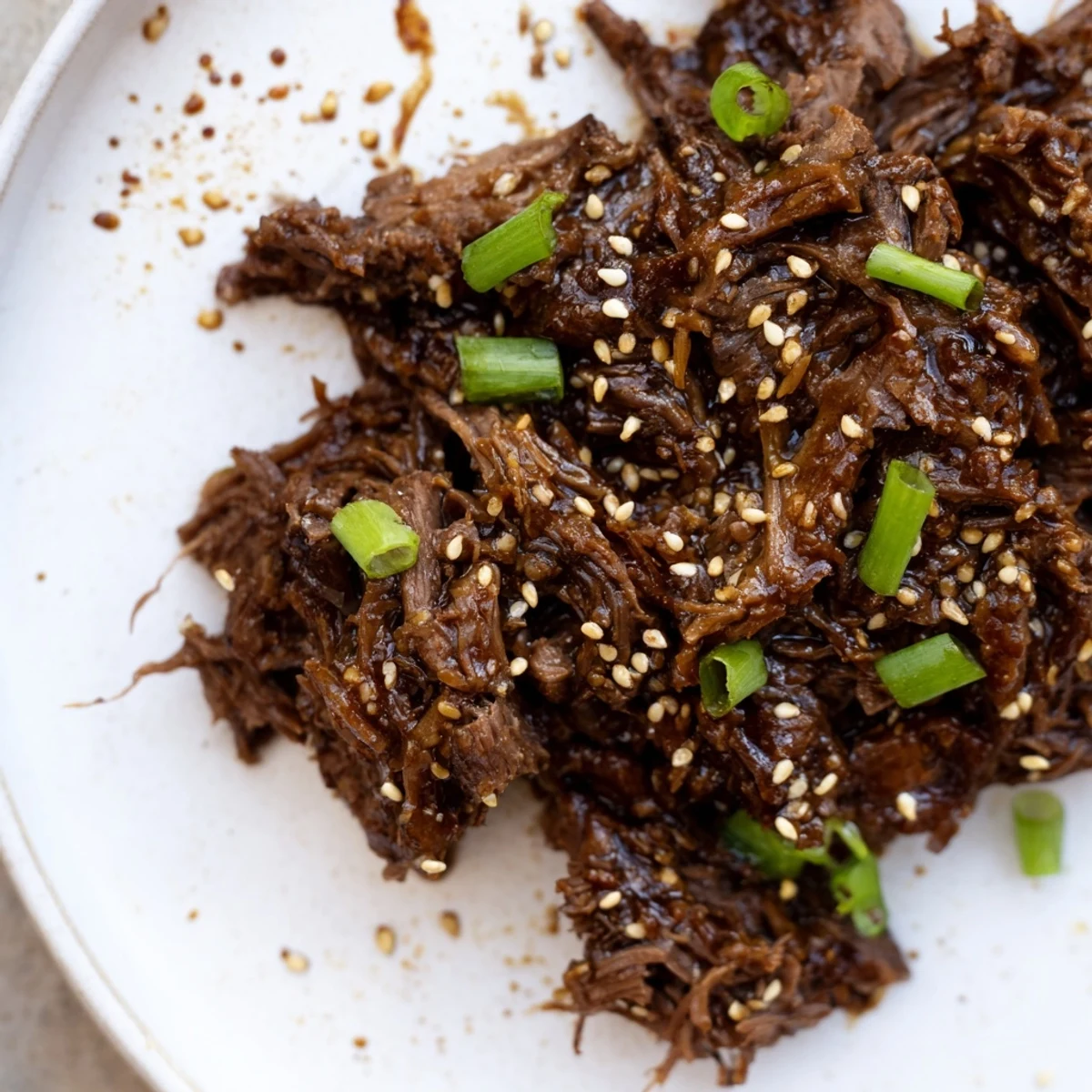
Save Tender beef chuck slow-cooked in a savory-sweet Korean-inspired sauce featuring soy sauce, brown sugar, ginger, garlic, gochujang, and grated pear. The beef becomes incredibly tender after 6-7 hours on low, then shredded and returned to a thickened sauce. Served over jasmine rice with green onions and sesame seeds for a complete, flavorful meal.
The smell of soy sauce and sesame filling my apartment on a Tuesday afternoon is still one of my favorite cooking memories. My roommate walked in from class and immediately asked what restaurant I'd ordered from, her face dropping when I told her I'd thrown everything in the slow cooker before leaving for lectures that morning. We ate it straight from the pot with wooden spoons, standing over the counter because neither of us could wait another second to sit down properly.
I brought this to a potluck last winter and watched my friend's Korean grandmother take her first bite, nodding slowly with this thoughtful expression before asking for the recipe. She told me the grated pear was the secret ingredient that made it taste familiar, that little bit of fruit sweetness that cuts through the rich soy and garlic. The next week I found a handwritten note in my mailbox with her own variation, tucked inside with drawings of pears and chili peppers.
Ingredients
- 2 lbs beef chuck roast: Chuck roast has the perfect marbling for slow cooking, breaking down into meltingly tender strands that soak up every drop of sauce
- ½ cup low-sodium soy sauce: Low-sodium gives you control over the saltiness since the sauce reduces and concentrates during cooking
- ⅓ cup brown sugar: Dark brown sugar adds a deeper molasses flavor that white sugar just can't replicate
- ¼ cup water: Just enough liquid to get things started without diluting those bold Korean flavors
- 2 tablespoons rice vinegar: Adds a subtle brightness that balances the heavy sweetness of the brown sugar
- 2 tablespoons sesame oil: Toasted sesame oil is non-negotiable here, that deep nutty fragrance is the soul of the dish
- 1 tablespoon freshly grated ginger: Fresh ginger has a spicy brightness that powder never achieves, grate it finely so it melts into the sauce
- 4 cloves garlic, minced: Don't be shy with the garlic, it mellows beautifully during the long cook time
- 1 tablespoon gochujang: This Korean chili paste adds layers of fermented depth and gentle heat, red pepper flakes work in a pinch
- 1 Asian pear, grated: The natural enzymes tenderize the meat while the fruit sweetness creates that authentic Korean flavor profile
- 1 tablespoon cornstarch: Essential for transforming the thin cooking liquid into a glossy, clingy sauce that coats every strand of beef
- 4 cups cooked jasmine rice: Jasmine rice's floral aroma complements the bold beef flavors perfectly
- 2 green onions, sliced: Fresh green onion cuts through the richness and adds a bright pop of color
- 1 tablespoon toasted sesame seeds: Toast your own seeds in a dry pan until fragrant, store-bought toasted seeds often taste stale
Instructions
- Whisk together the sauce:
- In a medium bowl, combine soy sauce, brown sugar, water, rice vinegar, sesame oil, ginger, garlic, gochujang, and grated pear until the sugar has completely dissolved and the mixture smells intoxicatingly aromatic
- Cover the beef with sauce:
- Arrange beef chunks in the bottom of your slow cooker, pour the sauce over and turn the pieces to ensure every surface is coated in that glossy, fragrant liquid
- Cook until fork tender:
- Cover and cook on low for 6 to 7 hours, until the beef is falling apart tender and your kitchen smells like an amazing Korean restaurant
- Shred the beef:
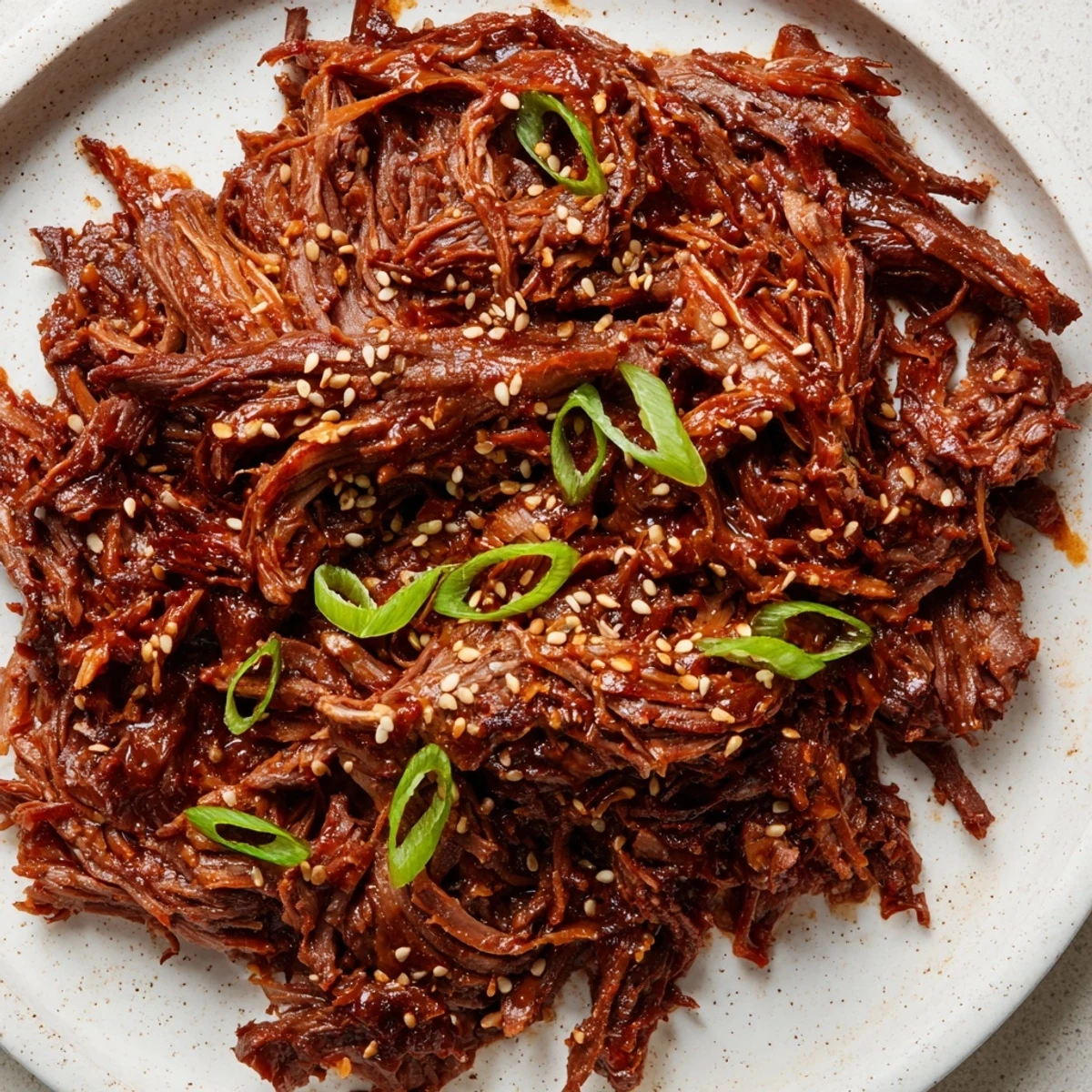
- Remove the beef to a cutting board and use two forks to pull it apart into shreds, letting the steam rise as you work
- Thicken the sauce:
- Skim any excess fat from the liquid left in the slow cooker, whisk cornstarch with cold water until smooth, then stir into the sauce and let it bubble until glossy and thickened
- Combine everything:
- Return the shredded beef to the slow cooker, stir to coat it completely in the thickened sauce, and cook on high for 15 minutes until everything is heated through and clinging together
- Serve with garnishes:
- Mound the beef over steaming hot rice and scatter with fresh green onions and toasted sesame seeds
 Save
Save My sister texted me at midnight after serving this to her new in-laws for the first time, three photos attached of an empty serving dish and her father-in-law holding a clean rice bowl. She wrote that they'd sat around the table for an hour after eating, just talking and picking at the last few strands of beef, none of them wanting the meal to end. That's what this recipe does, it turns dinner into something people linger over.
Make It Ahead
This beef actually improves after a day or two in the refrigerator, giving the flavors time to deepen and marry together. I often make it on Sunday and portion it into containers for effortless lunches throughout the week, the sauce thickening even more as it cools and reheats beautifully in the microwave.
Freezing Instructions
The shredded beef freezes exceptionally well, maintaining its texture and flavor for up to three months in airtight containers. Thaw overnight in the refrigerator and reheat gently with a splash of water to loosen the sauce back to its original glossy consistency.
Serving Suggestions
While rice is traditional, try serving this in lettuce wraps for a lighter approach or stuff it into steamed bao buns for an incredible fusion taco night. The beef also makes phenomenal kimchi fried rice the next day, just fry day-old rice with some chopped kimchi and a beaten egg before folding in the leftovers.
- Steamed broccoli or sautéed bok choy balance the richness perfectly
- A simple cucumber salad dressed with rice vinegar provides a refreshing contrast
- Extra gochujang on the side for heat lovers who want to customize their bowl
 Save
Save There's something deeply satisfying about a recipe that rewards you so generously for so little effort, filling your home with incredible aromas all day long and delivering a meal that makes people pause between bites.
Recipe FAQs
- → Can I use a different cut of beef?
-
Yes, you can use boneless beef chuck roast, beef brisket, or even boneless pork shoulder as substitutes. The key is to use a cut that becomes tender when slow-cooked for several hours.
- → What can I substitute for the Asian pear?
-
You can use a ripe Bosc pear, apple, or even pineapple as a substitute for the Asian pear. The fruit helps tenderize the beef and adds natural sweetness to the sauce.
- → How spicy is this dish?
-
The heat level depends on the gochujang or red pepper flakes you use. Start with 1 teaspoon of red pepper flakes for mild heat, or increase to taste. You can always add more later if needed.
- → Can I make this ahead of time?
-
Absolutely! You can prepare the sauce and marinate the beef overnight in the refrigerator. This allows the flavors to develop more deeply. Just cook as directed the next day.
- → What sides pair well with this dish?
-
This dish pairs beautifully with jasmine or short-grain rice. You can also serve it with steamed broccoli, sautéed vegetables, or kimchi for an authentic Korean touch.