
 Save
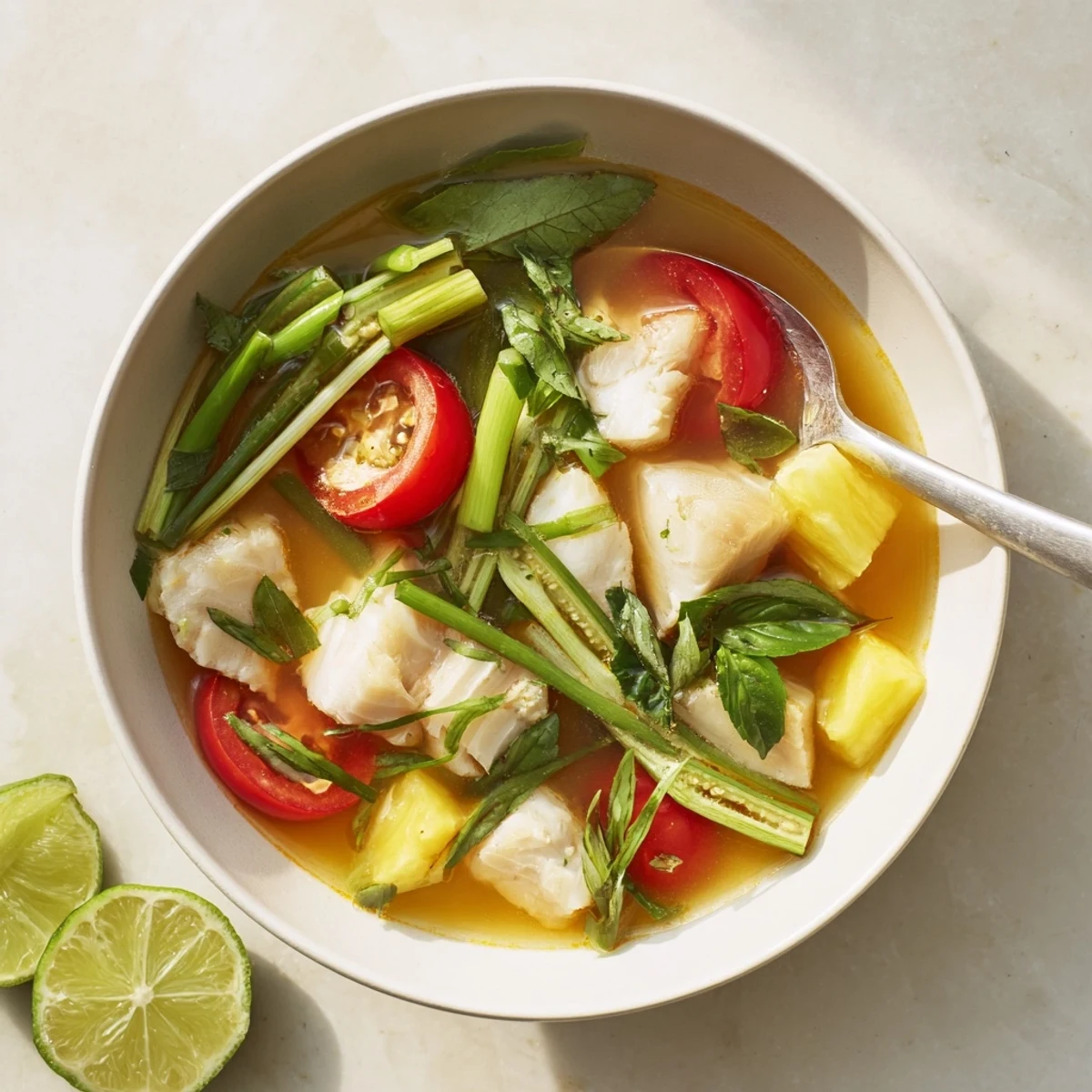
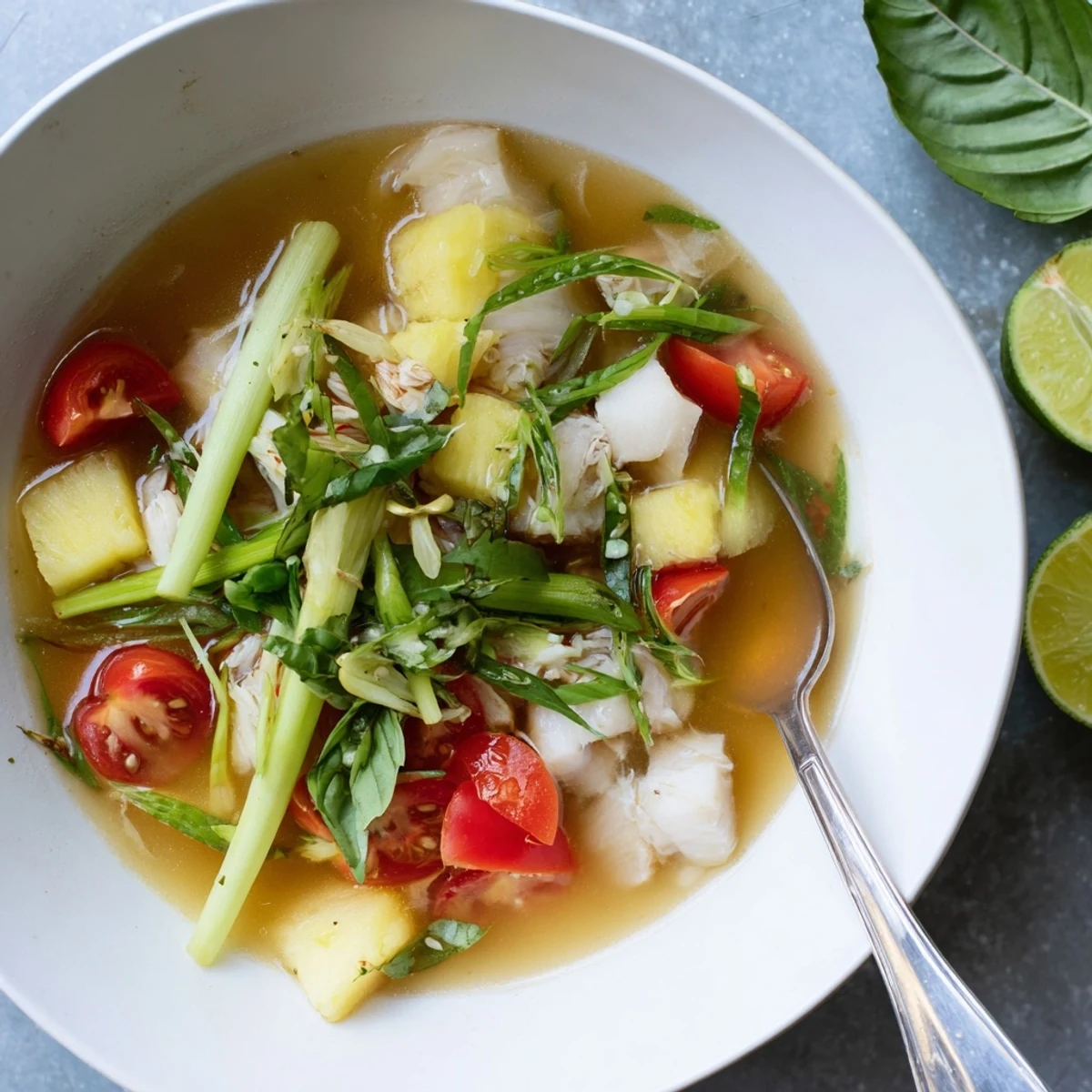
Save This modern take on Canh Chua delivers the perfect balance of sweet, sour, and salty flavors that Vietnamese cuisine is celebrated for. Tender white fish simmers gently alongside juicy pineapple and tomatoes in a fragrant tamarind-based broth, creating a light yet satisfying soup that feels both comforting and refreshing.
The soup comes together in just 40 minutes, making it ideal for weeknight dinners. The key lies in achieving that harmonious flavor equilibrium—tamarind provides the signature tanginess, balanced by natural sweetness from pineapple and depth from fish sauce. Fresh herbs like Thai basil and coriander are added at the end to maintain their vibrant aroma and color.
Canh Chua is traditionally served with steamed jasmine rice, which soaks up the flavorful broth, or with rice vermicelli for a more substantial meal. The soup is naturally dairy-free and gluten-free, while offering lean protein from the fish and essential vitamins from the variety of vegetables.
The first time I tasted canh chua was at my friend Lan is tiny apartment in Saigon. Her grandmother stood over a steaming pot, dropping in fish fillets that curled into perfect opaque pieces within seconds. The kitchen filled with this impossible harmony of tart tamarind, sweet pineapple, and something deeper I could not name. I watched her squeeze lime into the broth with the confidence of someone who had made this soup a thousand times before, tasting after each addition.
Last month I made this for my sister who swore she hated fish soup. She watched me drop the pineapple wedges into the bubbling broth, their yellow edges softening against the tomatoes. When she finally took that first spoonful, she looked up with wide eyes and asked why I had never made this before. Now she texts me every Sunday asking if it is canh chua weather.
Ingredients
- White fish fillets: I have used catfish, tilapia, and bass successfully. The key is cutting them into generous bite sized pieces that hold their shape in the hot broth
- Tamarind paste: This is the soul of the soup. I keep a jar in my refrigerator door now because nothing else quite captures that bright tangy depth
- Pineapple: Fresh pineapple matters here. The natural sweetness balances the tamarind and the chunks become tender little jewels in every spoonful
- Fish sauce: Do not be intimidated by the smell from the bottle. It dissolves into the broth adding that essential savory foundation Vietnamese cooking depends on
- Bean sprouts: Add these at the very end so they stay crisp. They provide this fantastic fresh crunch against the soft fish and tender vegetables
- Thai basil and coriander: These herbs are not optional garnishes. They wake up the whole bowl with their aromatic oils, so be generous
Instructions
- Build your aromatic base:
- Heat a splash of oil in your large pot over medium heat. Add the minced garlic and sliced shallots, stirring until they release their fragrance and turn lightly golden, about 2 minutes. The kitchen should start smelling like a Vietnamese restaurant already.
- Create the broth:
- Pour in your water or fish stock, then stir in the tamarind paste, sugar, salt, and fish sauce. Let it come to a gentle boil, watching the tamarind swirl into the liquid and turn it a beautiful amber color.
- Add the hearty vegetables:
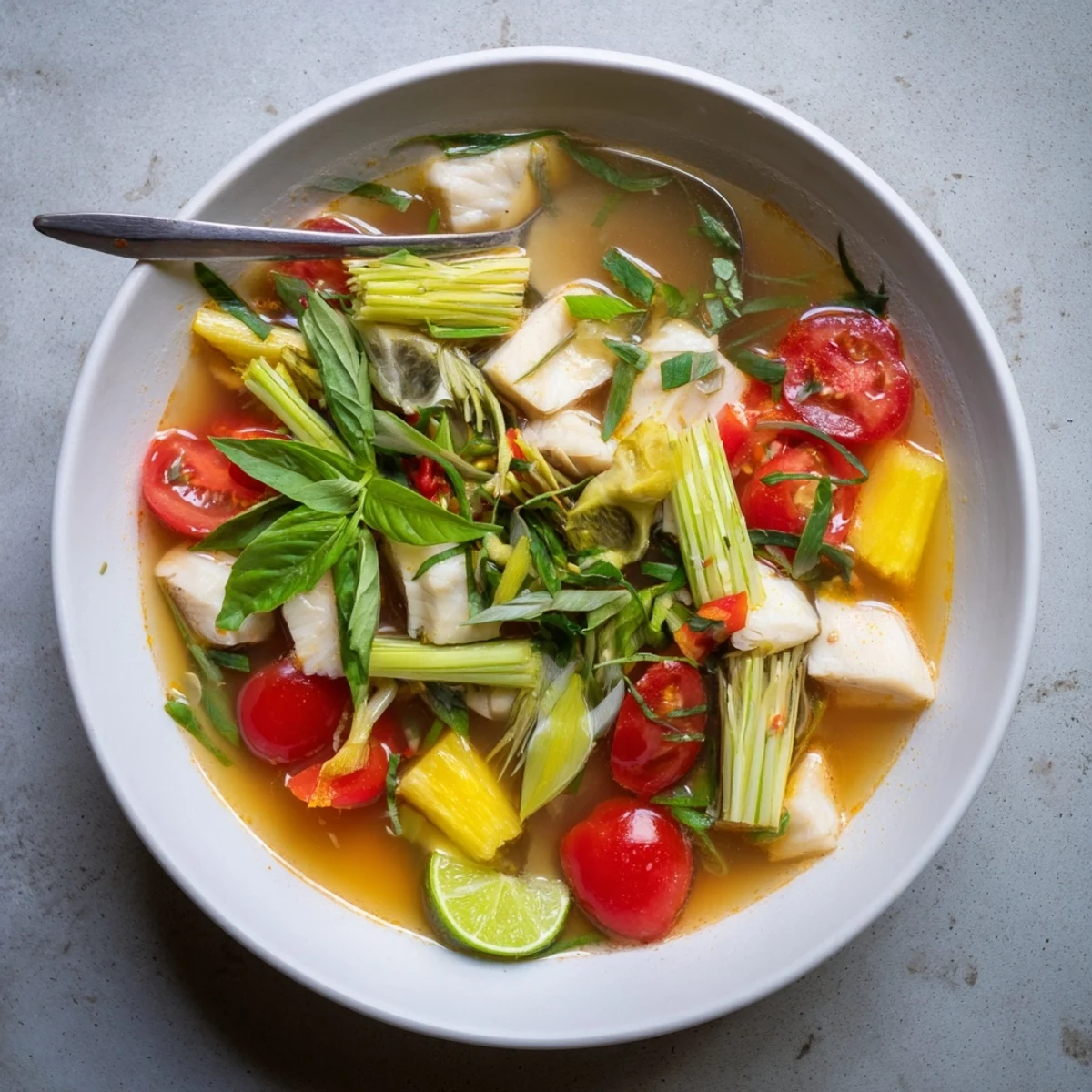
- Drop in your tomato wedges, pineapple pieces, okra if you are using it, and sliced celery. Let them simmer for about 5 minutes until they are just tender. The pineapple will start to release its sweetness into the broth.
- Cook the fish gently:
- Lower the heat slightly and slip in your fish pieces. Let them cook for 3 to 4 minutes until they turn opaque and flake easily. The fish will release some of its own sweetness into the soup as it cooks.
- Balance the flavors:
- Taste your broth now. This is the moment you adjust. More fish sauce for depth, a pinch more salt if it is flat, an extra sprinkle of sugar if the tamarind is too aggressive. Trust your palate.
- Finish with freshness:
- Stir in the bean sprouts and sliced chili if you want heat. Let them simmer for just 1 minute, then remove the pot from heat immediately. The sprouts should still snap when you bite them.
- Garnish generously:
- Ladle the hot soup into bowls and top each one with a handful of Thai basil, chopped coriander, scallions, and fried shallots if you have them. Serve with lime wedges on the side so everyone can add their own final squeeze of brightness.
 Save
Save This recipe has become my go to when friends are feeling under the weather or just homesick. Something about that hot sour broth wrapped around tender fish feels like a hug in a bowl. I have watched three different people tear up after their first spoonful, reminded of grandmothers and childhood kitchens oceans away.
Making It Your Own
The beauty of canh chua lies in its flexibility. I have made it with shrimp when I could not find white fish, and the sweetness of shellfish paired beautifully with the pineapple. Sometimes I throw in elephant ear stems if I can find them at the Asian market. Their mild crunch absorbs the broth like nothing else, though I have learned to slice them thinly so they cook through.
Perfect Pairings
In Vietnam this soup would never stand alone at the table. I always serve it over steamed jasmine rice, letting the grains soak up that precious broth. On nights I want something lighter, rice vermicelli noodles work beautifully. The broth clings to the noodles and each strand becomes a vehicle for all those complex flavors.
Timing Is Everything
What I love most about this soup is how it teaches you to pay attention. The bean sprouts need only seconds. The herbs go in last, right before serving, so their oils perfume the steam rising from the bowl. Even the limes wait until the very end, their acidity meant to brighten each individual portion according to taste. I prep everything before I turn on the stove, arranging ingredients in little bowls like a cooking show. That way I am not scrambling for the coriander while the fish overcooks. Good cooking is mostly just being ready.
- Set your table before you start cooking. This soup tastes best eaten piping hot, the steam still carrying the scent of Thai basil up to meet you.
- Double the batch. Leftovers reheat beautifully and the flavors meld even more beautifully overnight.
- Keep extra limes on hand. Someone always wants more acid at the table, and that final squeeze is what makes the soup sing.
 Save
Save I hope this soup finds its way into your regular rotation, the way it has into mine. There is something profound about a dish that can transport you across continents with just one spoonful.
Recipe FAQs
- → What makes Canh Chua sour?
-
The signature tanginess comes from tamarind paste, which provides a natural, fruity sourness that balances the sweet pineapple and savory fish sauce. You can adjust the amount to achieve your preferred level of acidity.
- → What type of fish works best?
-
White fish fillets like catfish, tilapia, sea bass, or cod are ideal because they hold their shape during cooking and absorb flavors well. Avoid delicate fish that might flake apart too easily in the simmering broth.
- → Can I make this vegetarian?
-
Absolutely. Substitute firm tofu cubes for the fish and use vegetable or mushroom stock instead of fish stock. Replace fish sauce with soy sauce or a vegetarian fish sauce alternative to maintain the umami depth.
- → How do I store leftovers?
-
Store cooled soup in an airtight container in the refrigerator for up to 2 days. Reheat gently over medium-low heat to avoid overcooking the fish. Add fresh herbs and bean sprouts just before serving for the best texture and flavor.
- → What can I serve with Canh Chua?
-
Steamed jasmine rice is the classic accompaniment, perfect for soaking up the tangy broth. You can also serve it with rice vermicelli noodles for a complete bowl, or with crusty bread for dipping. A simple side of sautéed vegetables complements the light soup nicely.
- → Is okra necessary?
-
Okra is optional but traditional—it adds a subtle thickness to the broth and pleasant texture. If you're not a fan or can't find it, simply omit it. The soup remains delicious without it.