
 Save
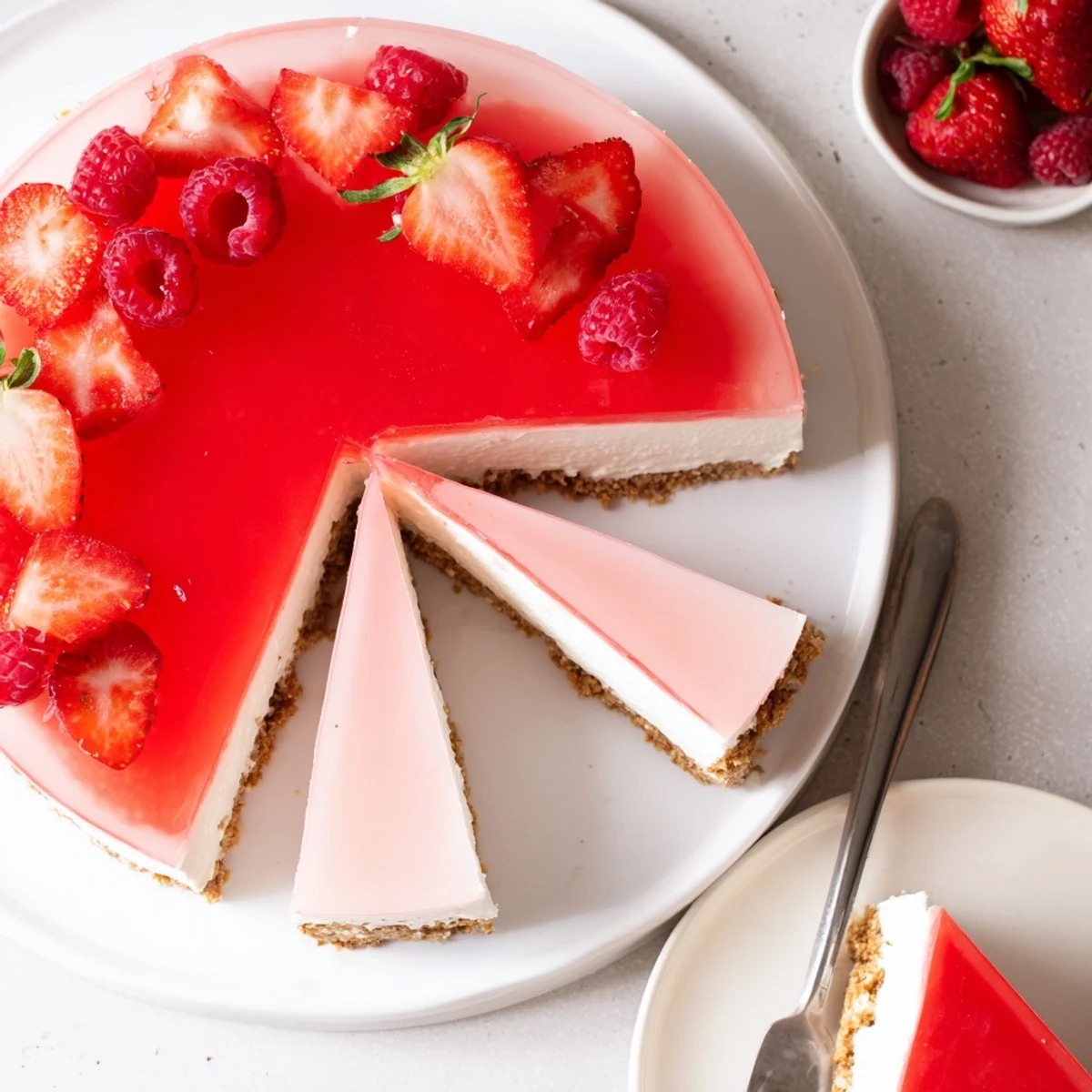
Save This luscious no-bake dessert combines the creamy tang of Greek yogurt with smooth cream cheese, all nestled on a crisp buttery graham cracker crust. The crowning glory is a shimmering layer of fruit-flavored jello that adds both beauty and refreshing contrast. Simply mix, chill, and serve this crowd-pleasing treat that's perfect for warm weather gatherings or anytime you want something special without heating up the kitchen.
The summer our ancient air conditioner finally gave up, I found myself standing in front of the open freezer at midnight, desperate for something sweet but refusing to heat up the kitchen. My grandmother had mentioned something about a cheesecake that never saw the inside of an oven, and suddenly I understood why she'd always made these during July heatwaves. That first attempt wobbled suspiciously, but the next morning I cut into the most impossibly light, creamy slice I'd ever tasted. Now it's the dessert I make whenever someone says they can't possibly bake anything.
I brought one to a potluck last summer, and my friend's eight-year-old took one bite and announced it tasted like clouds. His mother laughed and asked for the recipe, but later confided she'd been making cheesecakes for years and hers never turned out that smooth. There's something magical about how the gelatin creates this silky texture that traditional cheesecakes achieve through eggs and careful temperature control. The best part is watching people's faces when they realize there's no baking involved, as if I've shared some sort of kitchen sorcery.
Ingredients
- 1 1/2 cups graham cracker crumbs: I pulse whole crackers in the food processor, but crushed by hand works fine too—just aim for uniform crumbs
- 1/3 cup unsalted butter, melted: Make sure it's completely liquid so every crumb gets coated and the crust holds together properly
- 2 tbsp granulated sugar: Just enough sweetness to balance the buttery cracker flavor
- 8 oz cream cheese, softened: Leave it out for at least an hour—cold cream cheese creates lumps that no amount of mixing can fix
- 1 cup Greek yogurt: Full fat or 2% works best here, anything thinner might affect how the filling sets
- 1/2 cup powdered sugar, sifted: Sifting is non-negotiable unless you enjoy finding tiny sugar clumps in your smooth filling
- 1 tsp vanilla extract: Pure vanilla makes all the difference in something this simple
- 1 tbsp lemon juice: Freshly squeezed adds brightness that enhances the tangy Greek yogurt
- 2 tsp powdered gelatin: This is what gives the filling its structure without traditional baking
- 3 tbsp cold water: For blooming the gelatin—cold water helps it absorb evenly
- 1 box fruit-flavored gelatin: Strawberry, raspberry, or lemon all work beautifully with the creamy base
- 1 cup boiling water: Hot enough to completely dissolve the gelatin crystals
- 1/2 cup cold water: Cools everything down so it doesn't melt your cheesecake layer when poured
- Fresh berries or fruit slices: Optional but they make it look like you spent hours on presentation
Instructions
- Prepare your pan and crust:
- Line a 9-inch springform pan with parchment paper—this simple step saves so much grief later. Mix the graham cracker crumbs, melted butter, and sugar in a medium bowl until every crumb is coated and the mixture holds together when squeezed. Press it firmly into the bottom of your pan, using the bottom of a measuring cup to get it even and compact. Pop it in the refrigerator to chill while you work on the filling.
- Bloom your gelatin:
- Sprinkle the powdered gelatin over 3 tablespoons of cold water in a small bowl and let it sit for about 5 minutes. It'll absorb the water and look kind of weirdly wrinkly, which means it's working. Meanwhile, you can get started on the filling.
- Make the creamy filling:
- Beat the softened cream cheese in a large bowl until it's completely smooth—no lumps allowed. Add the Greek yogurt, sifted powdered sugar, vanilla, and lemon juice, then beat until everything's incorporated and the mixture looks silky and uniform.
- Melt and incorporate the gelatin:
- Microwave your bloomed gelatin for about 15 seconds, just until it's completely dissolved. Let it cool for a minute—you don't want to cook the eggs in your filling (which is funny, because there are no eggs). Whisk it into your cheesecake mixture thoroughly.
- Set the cheesecake layer:
- Pour the filling over your chilled crust and smooth the top with a spatula. Refrigerate for at least 2 hours until it's set to the touch. It should feel firm but still have a slight jiggle when you gently shake the pan.
- Prepare the jello topping:
- Dissolve the fruit-flavored gelatin in 1 cup of boiling water, stirring until no crystals remain. Add the 1/2 cup cold water and let it cool to room temperature—this takes about 15-20 minutes, and patience here prevents melted cheesecake.
- Add the final layer:
- Gently pour the cooled jello over your set cheesecake layer. The key word is gently—you want it to float on top rather than mixing in. Refrigerate for at least 2 more hours until the jello is completely firm.
- Serve it up:
- Run a thin knife around the edge before releasing the springform—this keeps the jello layer from cracking. Garnish with fresh berries if you want it to look extra fancy, and slice while it's still cold for clean cuts.
 Save
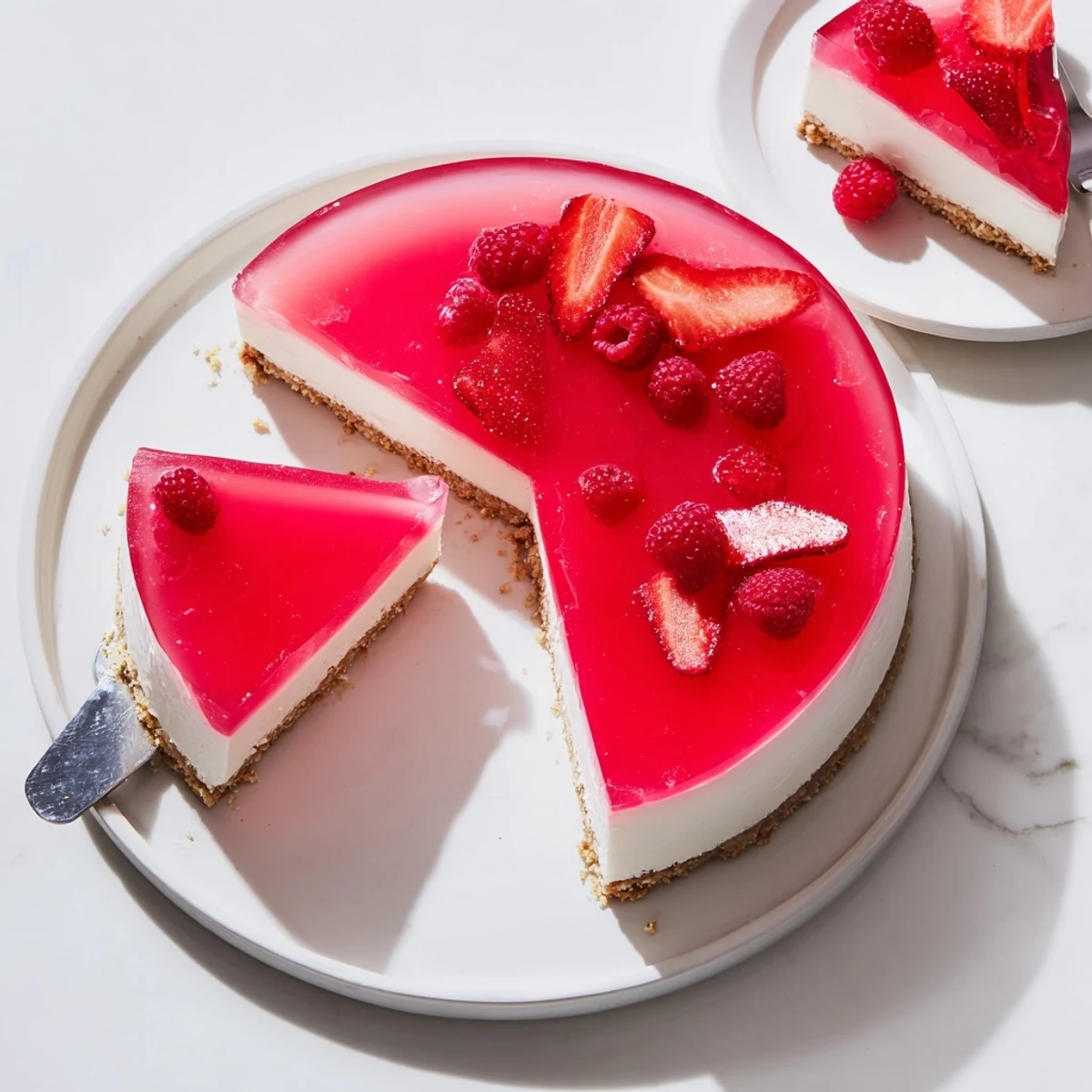
Save Last summer, my niece helped me make this for her mother's birthday. She was so fascinated by the concept of jello on top of cheesecake that she kept opening the refrigerator to check if it was working. When we finally served it, she took one bite and declared it the most beautiful thing she'd ever eaten, which I think was mostly about the two-toned effect but I'll take it. There's something about that clear, jewel-like jello layer on top of creamy white cheesecake that makes people assume it took all day.
Making It Your Own
I've experimented with different gelatin flavors over the years, and some combinations work surprisingly well. Peach jello with a touch of cinnamon in the crust tastes like summer in a dish. The lemon version creates this bright, restaurant-style dessert that feels much more sophisticated than it actually is. During fall, I've even used cranberry juice mixed with unflavored gelatin for a tart, seasonal topping that looks stunning on the holiday table.
Texture Secrets
The trick to that professional-looking jello layer is patience. Too many times I've rushed and poured warm jello onto the cheesecake, ending up with a swirly mess instead of distinct layers. I've learned to set a timer and walk away, checking after 15 minutes to see if the jello has cooled to room temperature. It should feel neither warm nor cold against your wrist—this is the sweet spot where it will pour smoothly over the cheesecake without melting it or mixing in.
Make-Ahead Magic
This is one of those rare desserts that actually improves with a little time. The flavors meld together beautifully overnight, and the texture becomes even more silky and cohesive. I've made it up to two days in advance, covering it loosely with foil once both layers are completely set. Just don't add fresh berries until right before serving, or they'll weep and make everything look sad.
- Run a knife under hot water between slices for the cleanest cuts through the jello layer
- Let the cheesecake sit at room temperature for 10 minutes before serving for optimal texture
- Any leftovers keep well in the refrigerator for up to three days, though it rarely lasts that long
 Save
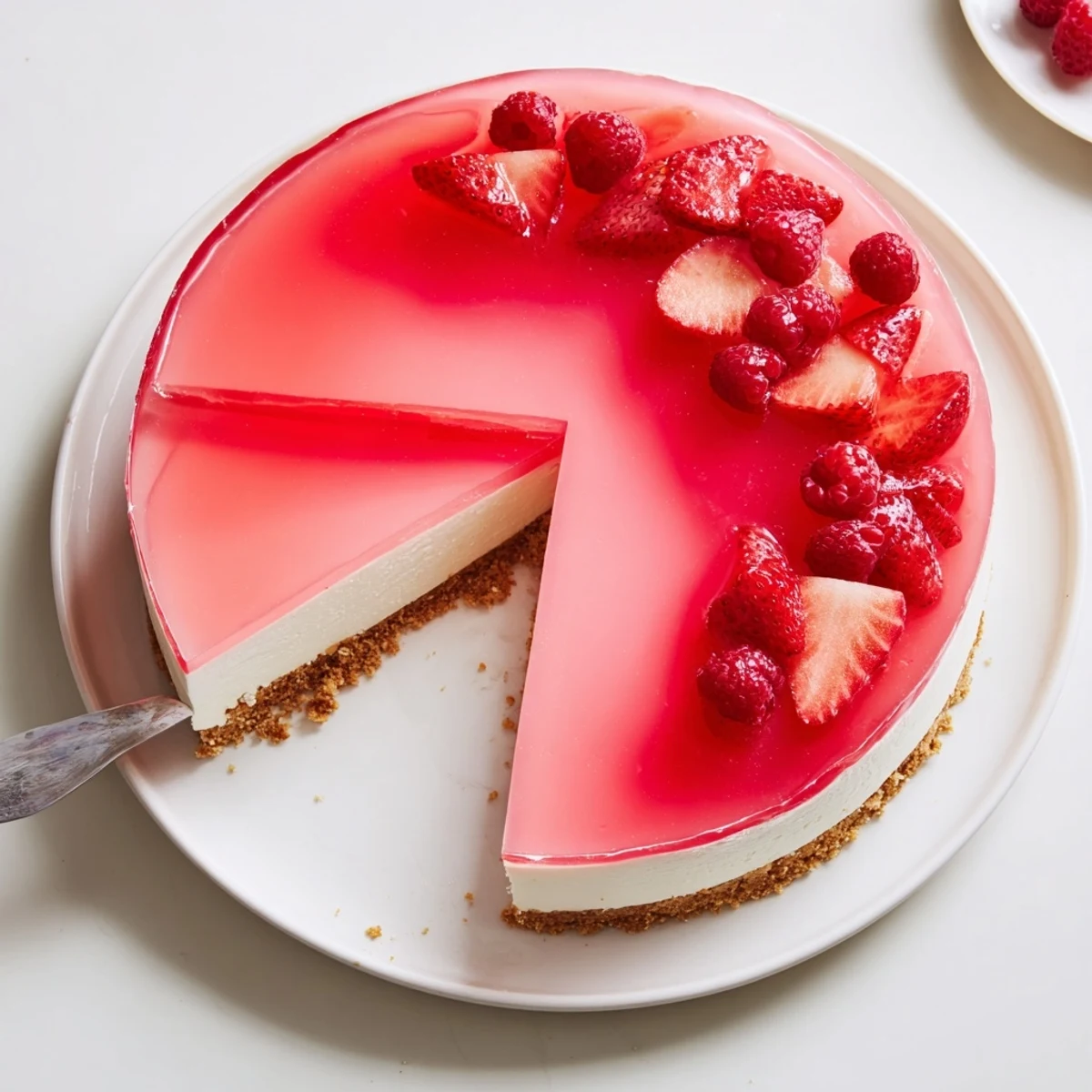
Save There's something deeply satisfying about serving a dessert that looks like it required professional skills but came together with nothing more than a refrigerator and a little patience.
Recipe FAQs
- → How long does this need to chill?
-
The cheesecake requires approximately 4 hours total chilling time—2 hours for the cream cheese layer to set, then 2 more hours after adding the jello topping. For best results, make it the night before serving.
- → Can I use different jello flavors?
-
Absolutely! Strawberry, raspberry, lemon, orange, or even peach work beautifully. Choose your favorite fruit flavor or match it to seasonal fresh berries for garnish.
- → Is this suitable for vegetarians?
-
Traditional gelatin is not vegetarian, but you can use agar powder or vegetarian gelatin substitutes. Check your jello package for vegetarian-friendly alternatives.
- → Can I make this gluten-free?
-
Yes! Simply use gluten-free graham crackers or crushed gluten-free cookies for the crust. Everything else in the filling is naturally gluten-free.
- → How should I store leftovers?
-
Keep covered in the refrigerator for up to 5 days. The jello layer may release some liquid over time, so it's best enjoyed within 2-3 days for optimal texture and appearance.
- → Can I use low-fat ingredients?
-
You can use reduced-fat cream cheese and Greek yogurt, though the texture may be slightly less creamy. Full-fat versions provide the richest, smoothest results.