
 Save
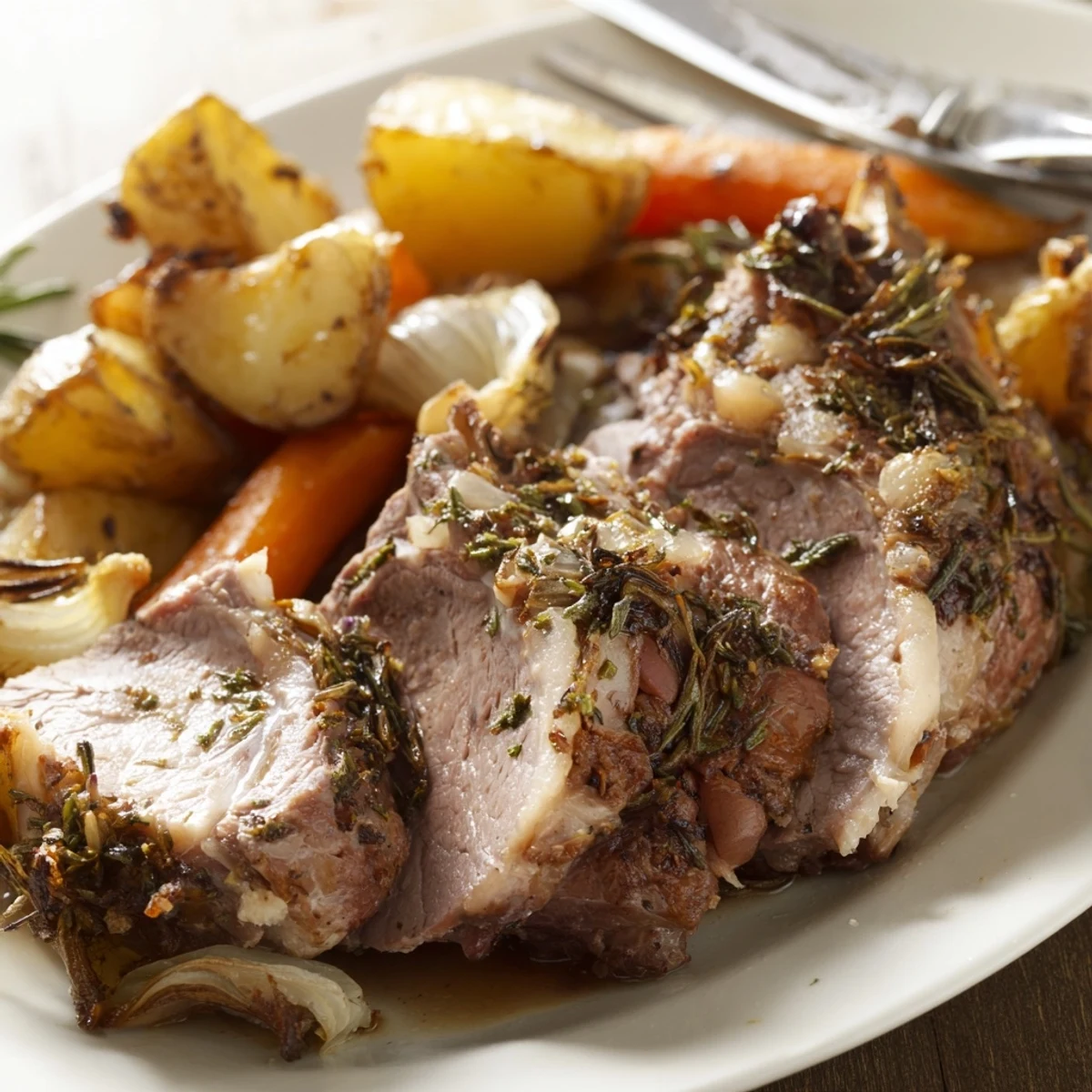
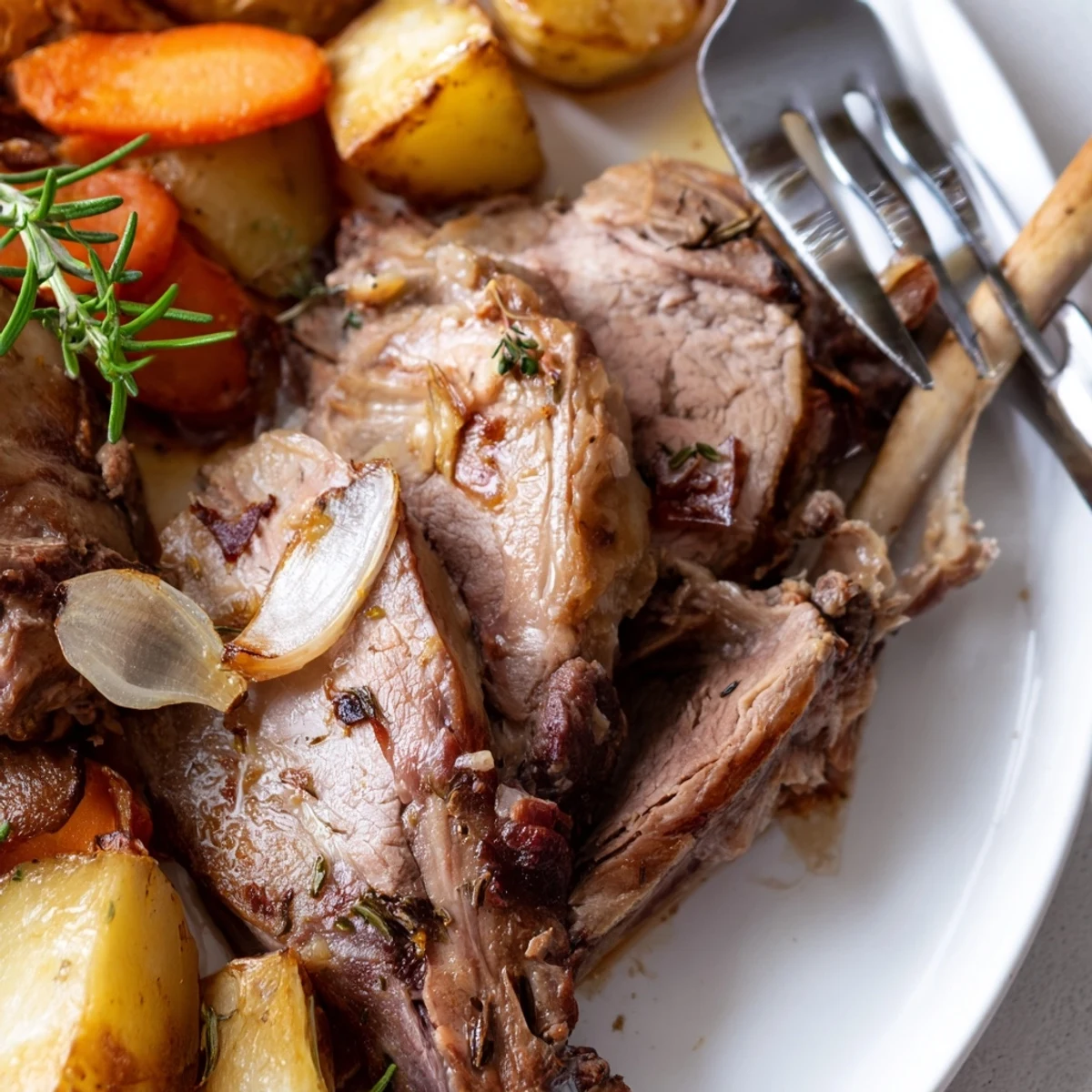
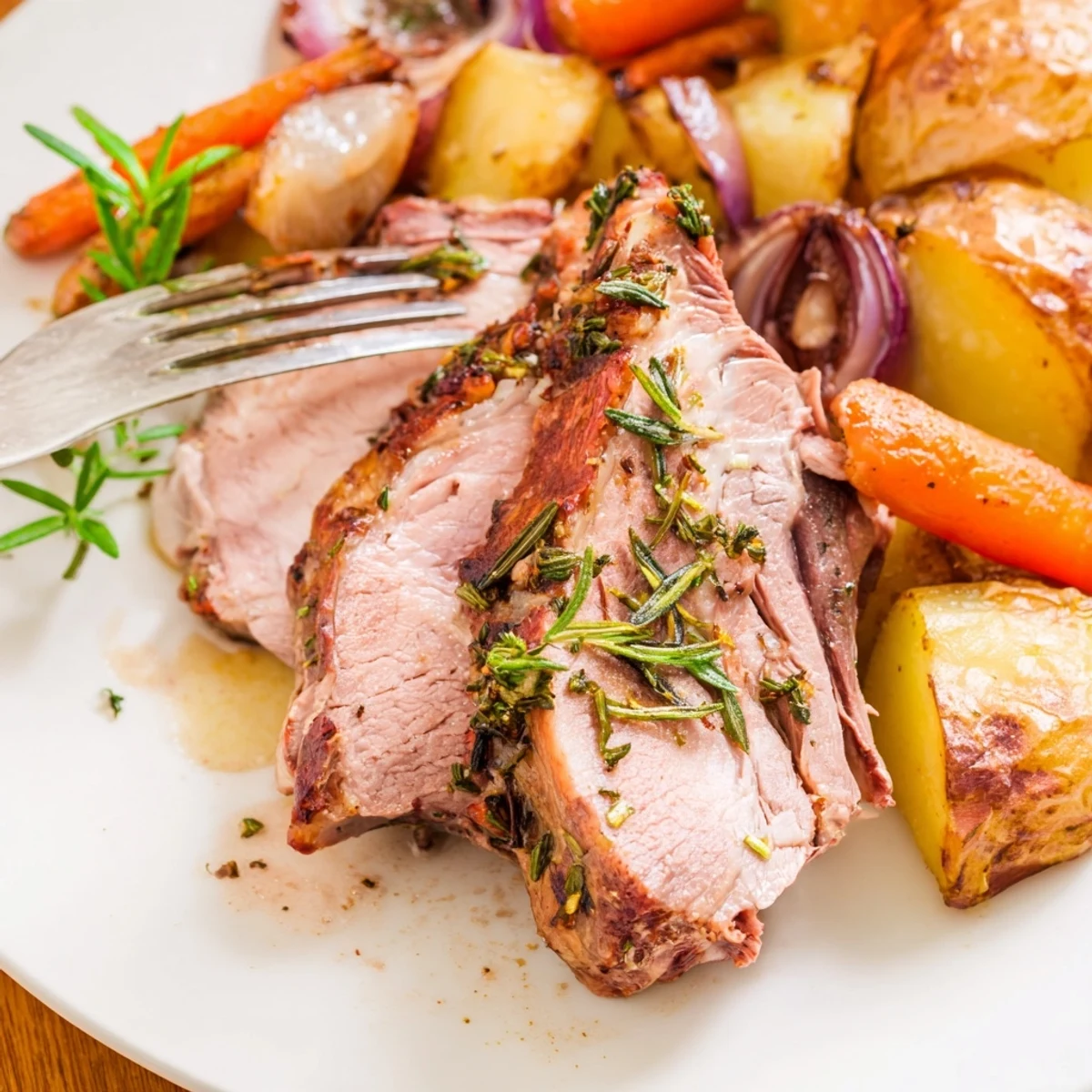
Save This dish highlights a bone-in leg of lamb seasoned with rosemary, thyme, salt, and pepper, slow roasted to juiciness. Large chunks of potatoes, carrots, onion, and garlic are roasted beneath, soaking up savory pan juices for rich flavors. The lamb rests briefly before slicing, served with vegetables and optional lemon wedges. The method balances tender meat with caramelized root vegetables, perfect for a comforting, gluten-free main course.
There's something about the smell of lamb roasting that pulls people into the kitchen whether they're invited or not. My aunt taught me this dish years ago, and I remember her matter-of-factly tucking vegetables under a leg of lamb like she was settling a child into bed. She didn't fuss over measurements, just trusted her hands and the oven's heat. Now when I make it, I feel that same quiet confidence.
I made this for my partner's birthday once, worried the whole time that something would go wrong. Instead, it came out golden and fragrant, and watching their face when they tasted it made me understand why people cook for each other. The lamb was so tender it fell apart, and nobody talked much—they just ate.
Ingredients
- Bone-in leg of lamb (1.5 kg): The bone keeps the meat moist and flavorful as it roasts; ask your butcher to score the fat in a crosshatch pattern so the seasoning really clings.
- Potatoes (900 g): Large chunks stay tender inside and golden outside; waxy potatoes like Yukon Gold hold their shape better than starchy ones.
- Carrots (500 g): Thick slices won't disappear into the pan juices and stay slightly sweet and caramelized at the edges.
- Onion and garlic: They're your flavor foundation, softening into the pan juices that become liquid gold for serving.
- Olive oil (3 tbsp): Use good oil here—it's not just cooking fat, it's part of the final taste.
- Sea salt and black pepper: Don't be shy; the lamb can handle bold seasoning, and the vegetables need it to taste like themselves.
- Fresh rosemary and thyme (or dried): Fresh herbs are worth the trip to the market, but dried work fine if that's what you have; they infuse the whole pan.
- Broth (250 ml): This keeps the vegetables steaming gently and becomes the pan sauce; use whichever you have, but check for salt content first.
- Lemon wedges: A squeeze at the end cuts through the richness and makes everything taste sharper and more alive.
Instructions
- Get the oven ready and prep the lamb:
- Heat your oven to 200°C and pat the lamb dry with paper towels—this helps the exterior brown instead of steam. Rub it generously with olive oil, salt, pepper, rosemary, and thyme, working the herbs into every crevice and across the fat cap.
- Build your vegetable base:
- Toss the potatoes, carrots, onion, and garlic with the remaining olive oil in your roasting pan, scattering them so they have some room to roast and not crowd each other. A light pinch of salt and pepper now saves you from forgetting it later.
- Nestle the lamb on the vegetables:
- Place the lamb right on top of everything—it will season the vegetables as it cooks and they'll cushion it gently. Pour the broth into the bottom of the pan, not over the lamb.
- First roast at high heat:
- Slide everything into the oven uncovered for a full hour. You'll hear it sizzle softly and smell it before the timer goes off—that's how you know it's working.
- Lower the heat and finish:
- Drop the temperature to 180°C and baste the lamb with the pan juices using a spoon or brush, really coating the top. This creates a deeper crust and keeps it moist inside. Roast for another 30 to 45 minutes, checking the internal temperature with a meat thermometer at the thickest part—60°C is medium-rare and tender, but go to 65°C if you prefer it more done.
- Rest before carving:
- This is the hard part—remove everything from the oven and tent the lamb loosely with foil, then leave it alone for 15 minutes. The meat will relax and reabsorb its juices, making every slice more tender and easier to carve.
- Plate and serve:
- Slice the lamb against the grain for maximum tenderness and arrange it on a platter with the roasted vegetables, onions, and garlic. Spoon the pan juices over everything, finish with lemon wedges if you like, and watch people's faces light up.
 Save
Save There was a moment when my grandmother tasted this dish at a Sunday dinner and closed her eyes while she chewed, then asked for seconds before anyone else had finished their first bite. She never complimented food with words much, but that moment told me everything. That's what this recipe does—it brings people together in a way that feels both celebratory and completely ordinary.
Why This Becomes a Favorite
This dish has a quiet confidence about it. It doesn't need a thousand ingredients or fussy techniques, just time and heat and good things roasted together. The vegetables become almost as important as the lamb, soaking up all that richness and turning into something you crave days later. There's also something deeply satisfying about pulling one pan out of the oven and having a complete meal ready to serve.
Adapting It to What You Have
If you don't have fresh rosemary and thyme, dried herbs work perfectly—just use half the amount because they're more concentrated. Waxy potatoes are ideal, but any potato will work; just adjust your timing if they're very large. Some people swap in parsnips or sweet potatoes and swear by them, and honestly, almost any root vegetable takes well to roasting alongside lamb.
Making It Your Own
This is a recipe that rewards small changes. A handful of fresh mint stirred into the pan juices at the end feels elegant without being complicated. Some cooks add a splash of red wine to the broth for deeper flavor, and others press whole garlic cloves into the lamb's fat before roasting. The beauty is that the base is sturdy enough to handle your instincts.
- Pair it with a bold red wine—Cabernet Sauvignon or Syrah really shine alongside the richness of roasted lamb.
- Squeeze fresh lemon over everything just before eating to cut through the richness and brighten each bite.
- Save the pan juices and spoon them over everything; they're liquid gold and shouldn't go to waste.
 Save
Save This is the kind of meal that makes a regular Tuesday feel special, or turns a special occasion into something memorable. Make it when you want to feel like you're really cooking something worthwhile.
Recipe FAQs
- → What temperature should I roast the lamb at?
-
Start roasting the lamb at 200°C (400°F) for one hour, then reduce to 180°C (350°F) and continue until desired doneness.
- → How do I ensure the lamb stays tender?
-
Rub the lamb with olive oil and herbs, roast uncovered, then let it rest covered in foil for 15 minutes before slicing.
- → Can I use other vegetables instead of potatoes and carrots?
-
Yes, sweet potatoes or parsnips are great alternatives for a different flavor profile.
- → What herbs pair well with roasted lamb?
-
Fresh or dried rosemary and thyme work well; mint or oregano can be added for an aromatic twist.
- → Is this dish suitable for gluten-free diets?
-
Yes, the ingredients are naturally gluten-free, but always check broth labels for hidden gluten.